Testimony submitted by Gregory J. Morris, Chief Executive Officer of New York City Employment & Training Coalition on April 14, 2026.
Good morning, Chair Aldebol. I’m Gregory Morris, CEO of the New York City Employment and Training Coalition — NYCETC — the city’s largest network of workforce development providers, serving New Yorkers across all five boroughs.
I’m here today because the data is unmistakable — and so is the opportunity in front of this Council. As of this past fall, New York City had more than 13,000 unfilled government positions — a citywide vacancy rate that remains more than double the pre-pandemic level, according to the NYC Comptroller’s Staffing Dashboard.
These aren’t administrative abstractions.
At the Department of Health and Mental Hygiene, a 27 percent vacancy rate in the mental health division means clinical and social worker roles are sitting empty while New Yorkers in crisis wait for help.
The Department of Social Services — the agency responsible for delivering benefits to the lowest-income New Yorkers at the center of this administration’s affordability agenda — is carrying a 12 percent vacancy rate, or more than 1,500 open positions.
The Department of Housing Preservation and Development, which must drive this Mayor’s 200,000-unit affordable housing commitment, is at 13 percent — and experts say those vacancies have already slowed project reviews and raised the cost of building.
And in perhaps the sharpest irony: DCAS, the very agency that administers and scores civil service exams, is nearly 17 percent vacant itself.
The cost of inaction is real and measurable.
According to the NYC Independent Budget Office, the City is on track to exceed its budgeted overtime spending by more than $840 million this fiscal year — largely because short-staffed agencies are paying existing workers overtime rather than filling roles that would relieve that pressure. Treating vacancies as savings is not fiscal responsibility. It is a deferred and compounding cost.
And the workforce to fill these roles is ready and waiting.
When Mayor Mamdani opened his transition portal in November, more than 70,000 New Yorkers submitted resumes within days. The problem is not demand. The problem is a system — one where navigating civil service exams, misaligned credential requirements, and an exam-to-hire timeline that can stretch beyond 18 months functions as a barrier, not a bridge, to public service careers.
NYCETC and our member organizations are ready to help build that bridge right now — in partnership with CUNY Community Colleges and the city’s labor and trade partners.
We are proposing a targeted investment to launch a coordinated, equity-centered pipeline into the sectors with the deepest vacancies: healthcare, early childhood education, and parks and sanitation.
NYCETC’s share would fund credentialed training, civil service exam preparation, fee support, and wraparound services that make completion possible for working adults—particularly immigrants, low-income residents, and workers aged 25 to 54, who are the backbone of this city but have been systematically left out of the public sector pipeline.
The remaining resources would flow to union and labor partners, anchoring the effort in real hiring outcomes rather than just training completions.
In year one alone, this investment will directly serve at least 300 New Yorkers: 50 credential completions, 100 exam preparation participants, 25 placements into full-time city jobs, and 125 incumbent municipal workers who gain the upskilling and advancement opportunities they have long deserved.
The demand is there. The infrastructure is there. The vacancies are there. An investment to connect those three things is not a budget line item — it is a commitment to a government that delivers. Thank you.
Watch the hearing
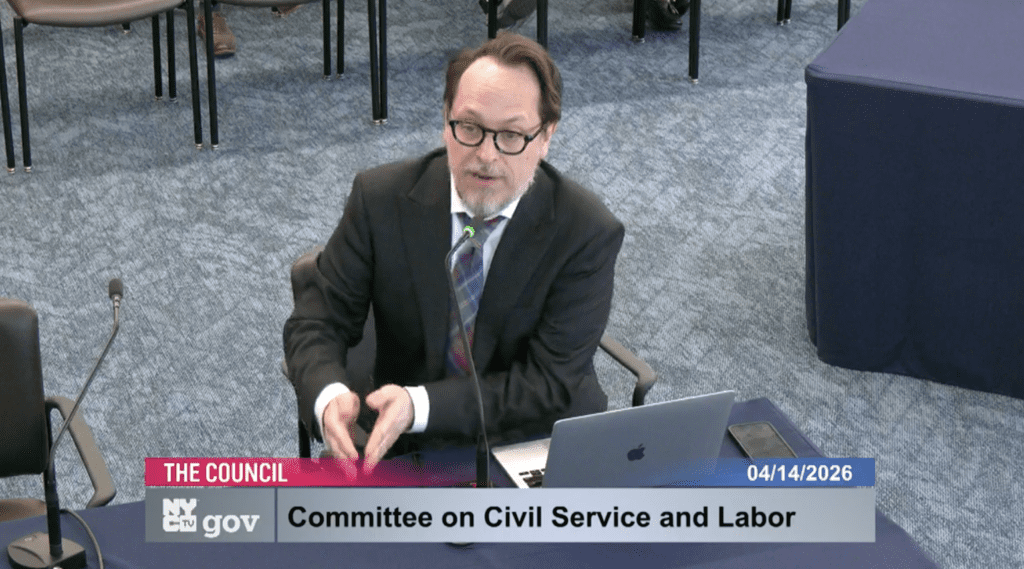
Watch Gregory J. Morris testify at yesterday’s oversight hearing on rebuilding the municipal workforce (starting at 1 hour and 11 minutes).